
 Go back
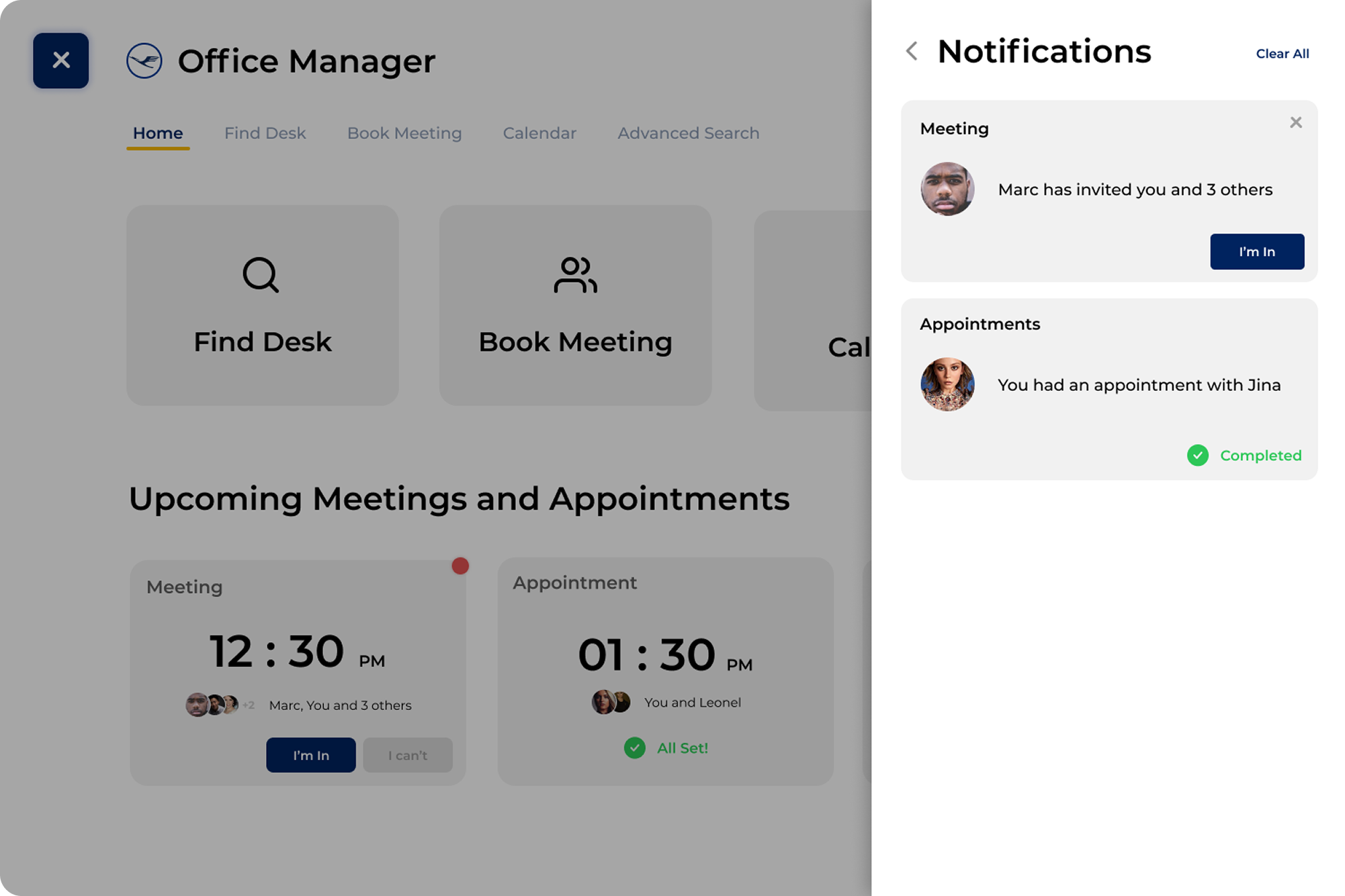
Project Overview
Context
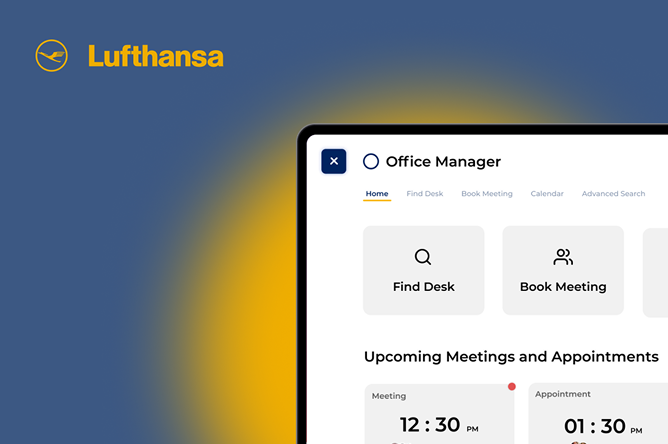
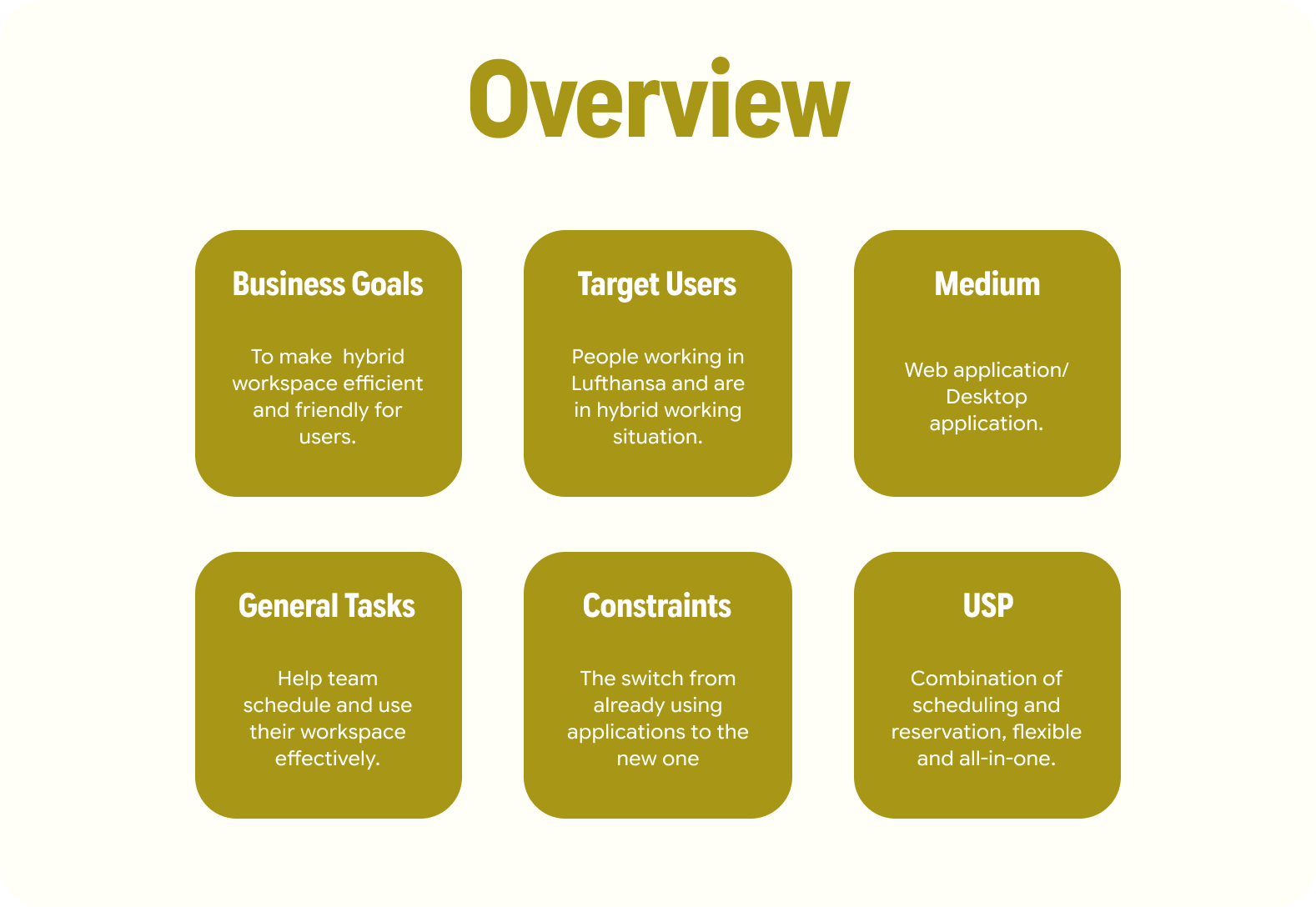
In partnership with the Lufthansa Group, this collaborative Master's project aimed to address the operational complexities of the post-pandemic workplace. As hybrid models became the norm, Lufthansa faced challenges in managing office space allocation efficiently while maintaining company culture.
The Challenge
Employees were struggling with a fragmented workflow, toggling between Microsoft Teams, Outlook, and spreadsheets to coordinate in-office days. This resulted in:
- Inefficient space utilization.
- Difficulty knowing when colleagues would be in the office.
- A disconnected employee experience.
The Goal
To design a unified, intuitive platform that streamlines desk booking, room scheduling, and team coordination to foster a seamless hybrid work culture.
Research & Discovery
To ensure our solution was grounded in reality, we analyzed the current market landscape and spoke directly with potential users.
Competitor Analysis
We evaluated existing tools (Microsoft Outlook, Teams, and specialized booking platforms) to identify gaps in the market.
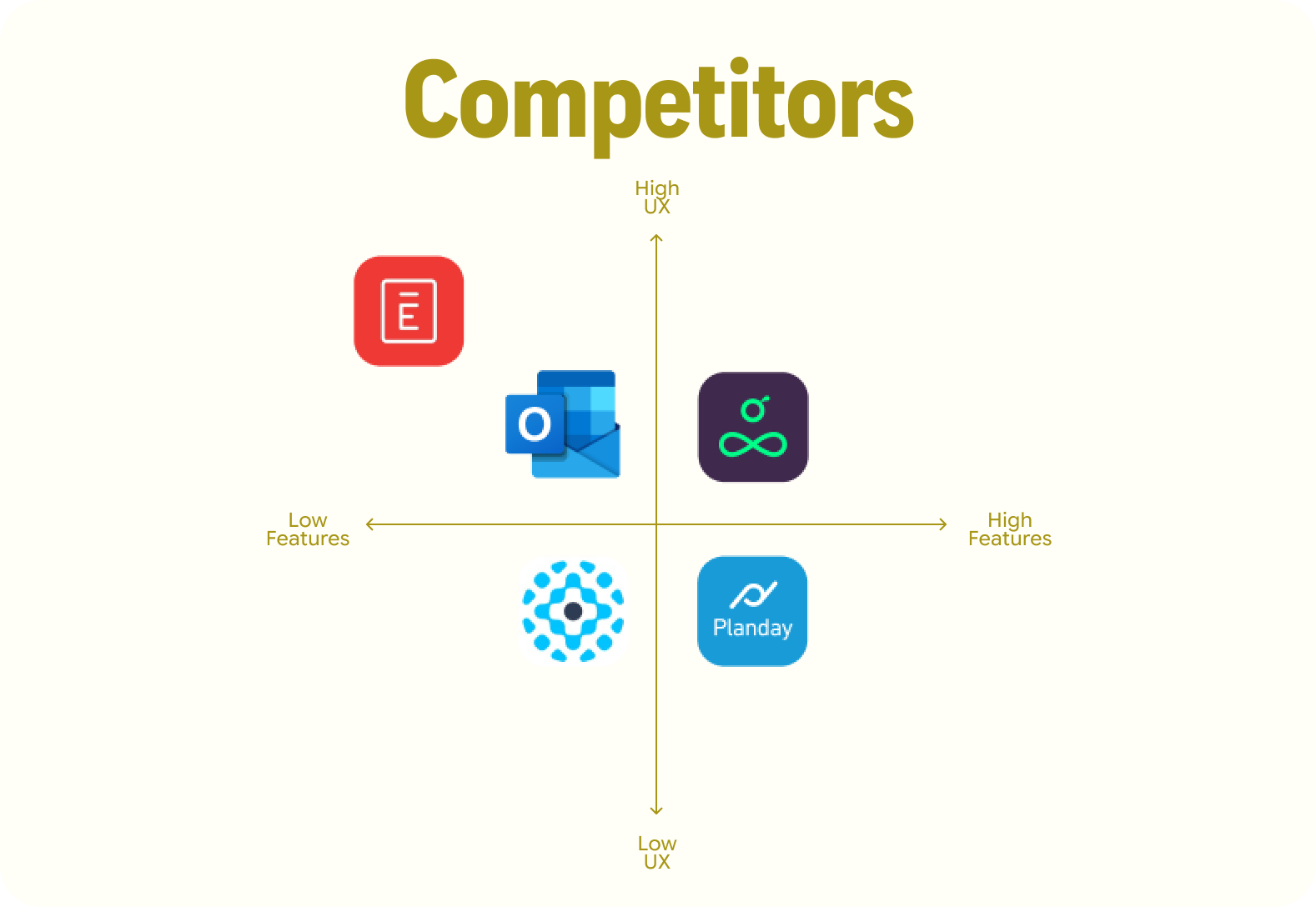
Key Insights:
- Fragmentation: Users disliked switching between multiple apps for related tasks.
- Visibility: Existing tools lacked a clear visual representation of "who is sitting where."
- Complexity: Many enterprise tools were cluttered and difficult to navigate.
User Research
We conducted semi-structured remote interviews with hybrid workers in Germany (ages 24–32) to understand their pain points and motivations.
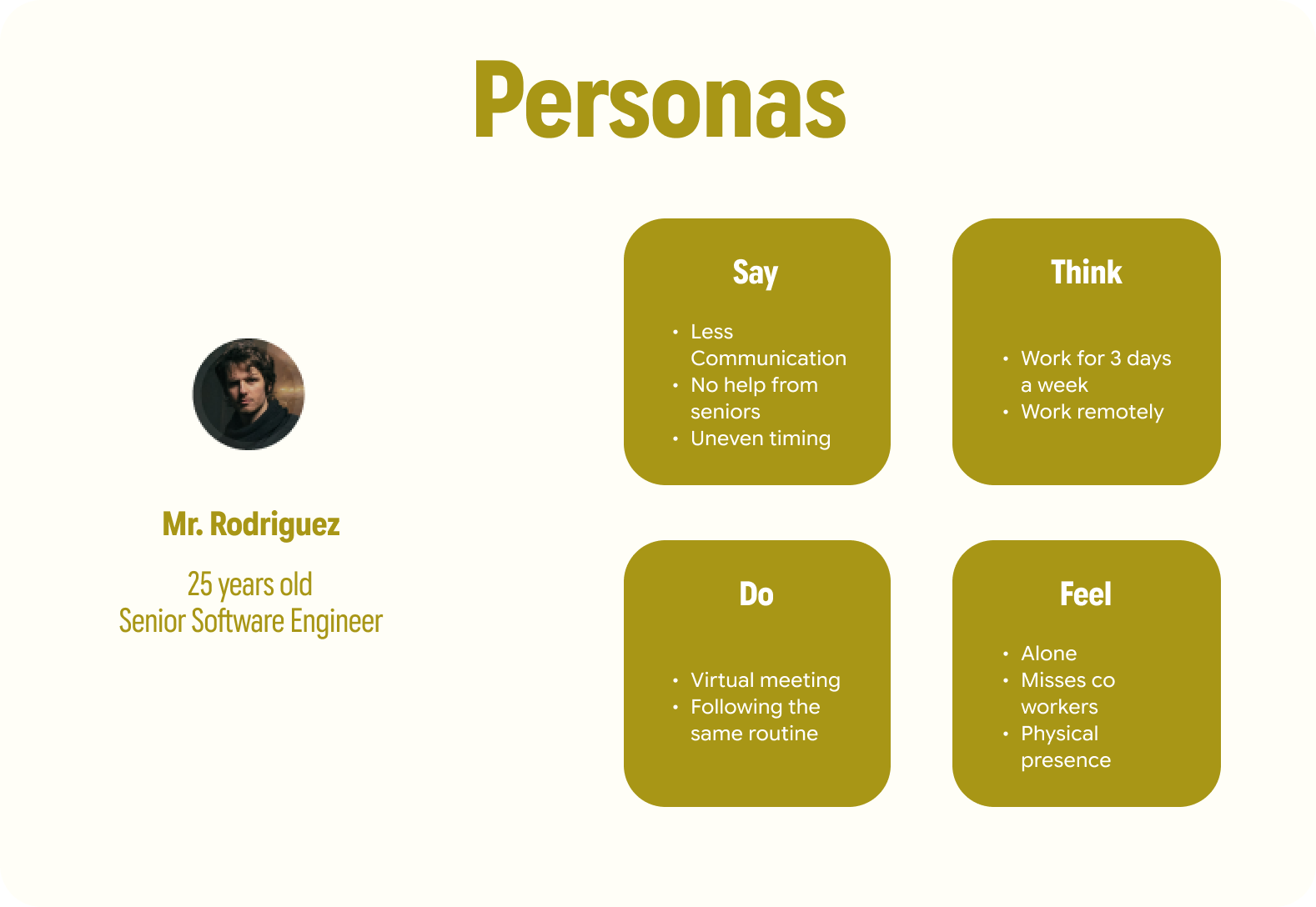
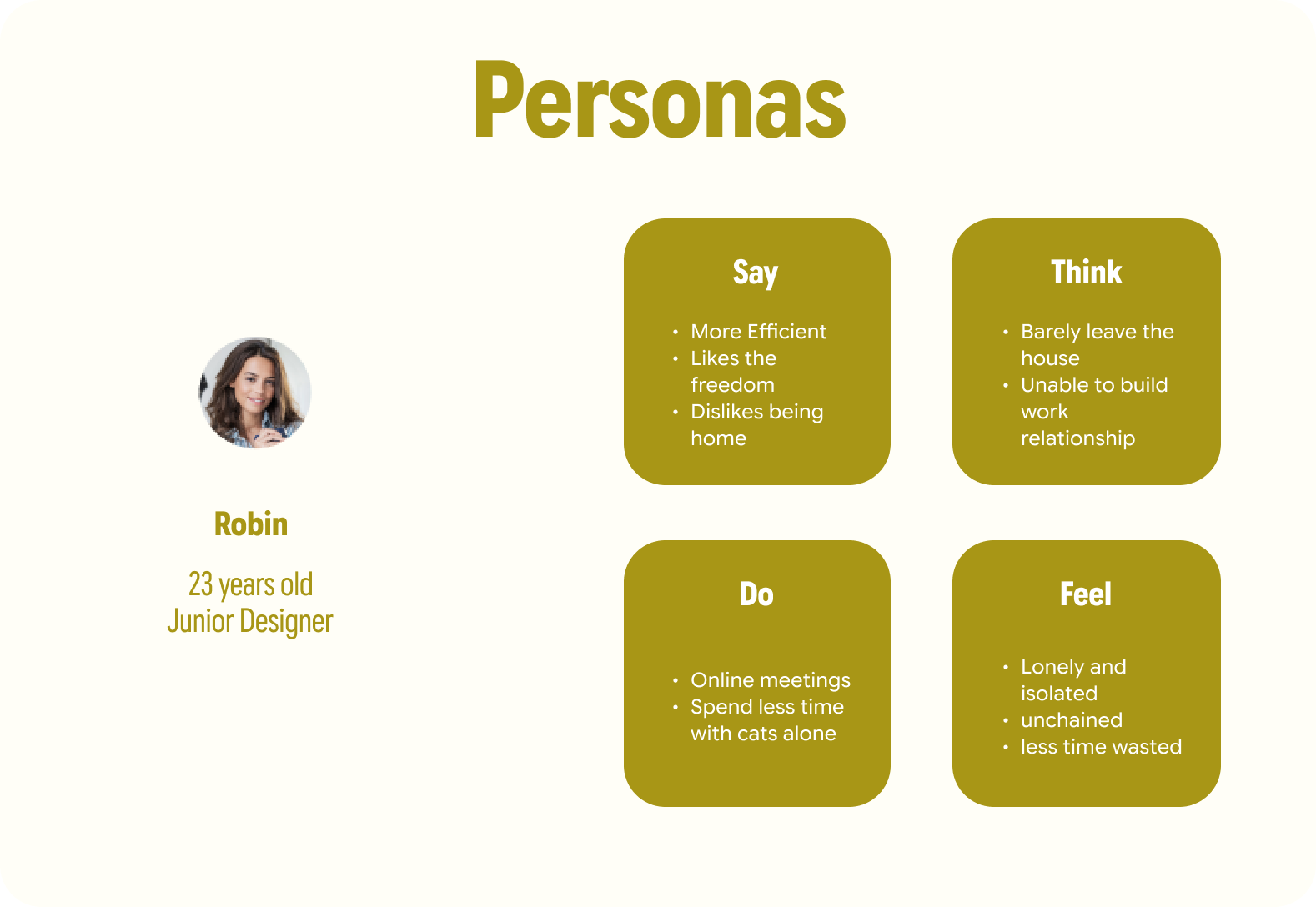


User Pain Points:
- Social Disconnection: "I only want to go to the office if my team is there."
- Booking Friction: "Booking a desk takes too many clicks."
- Work-Life Balance: Struggle to maintain boundaries when working from home.
Defining the Problem
Synthesizing our research, we defined the core design challenge:
"How might we help Lufthansa employees efficiently manage hybrid work schedules and office space allocation while maintaining workplace connections and reducing tool fragmentation?"
Ideation & Concept
We utilized brainwriting and collaborative Miro sessions to generate features, prioritizing them based on user value and technical feasibility.
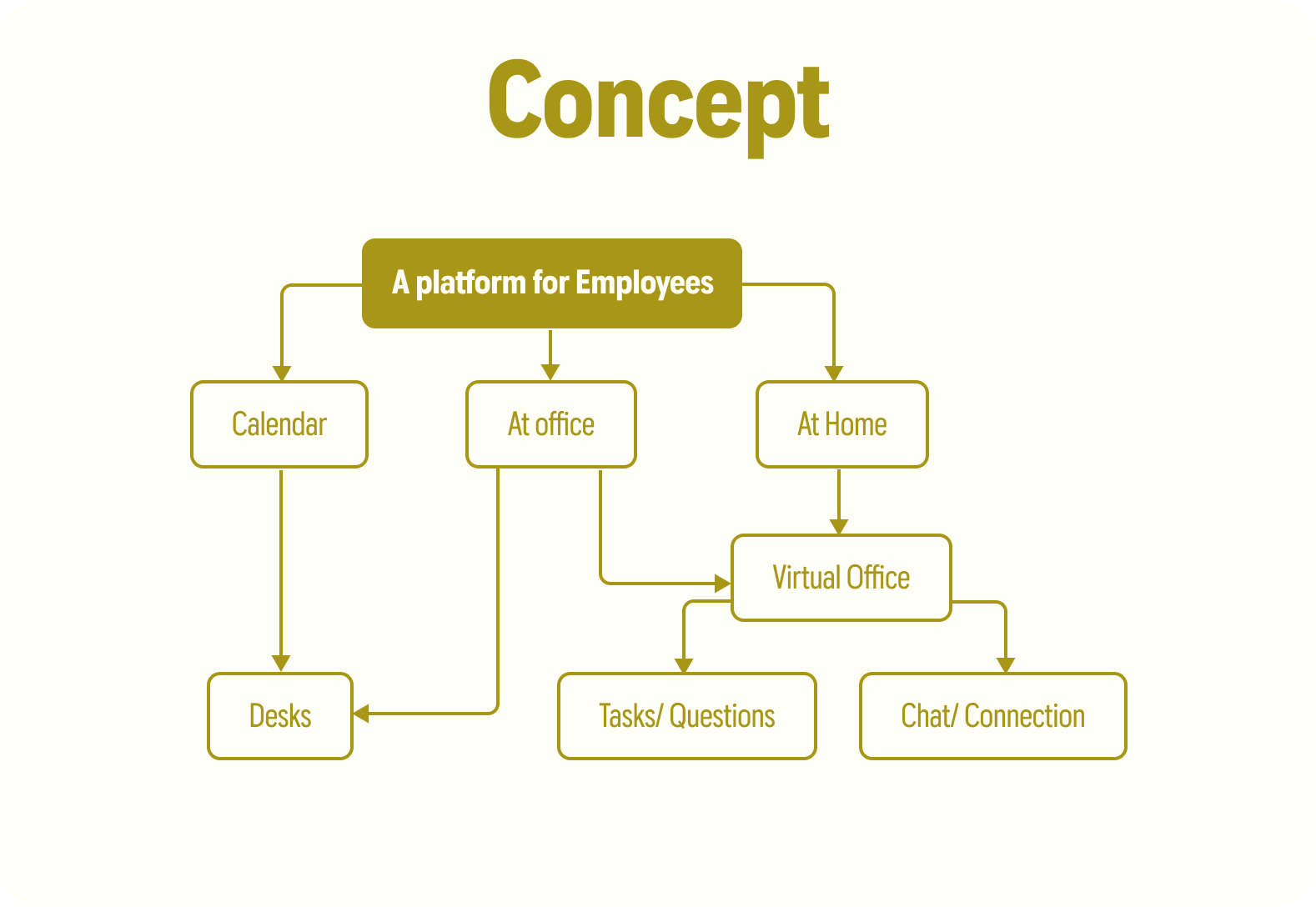
Core Features Selected:
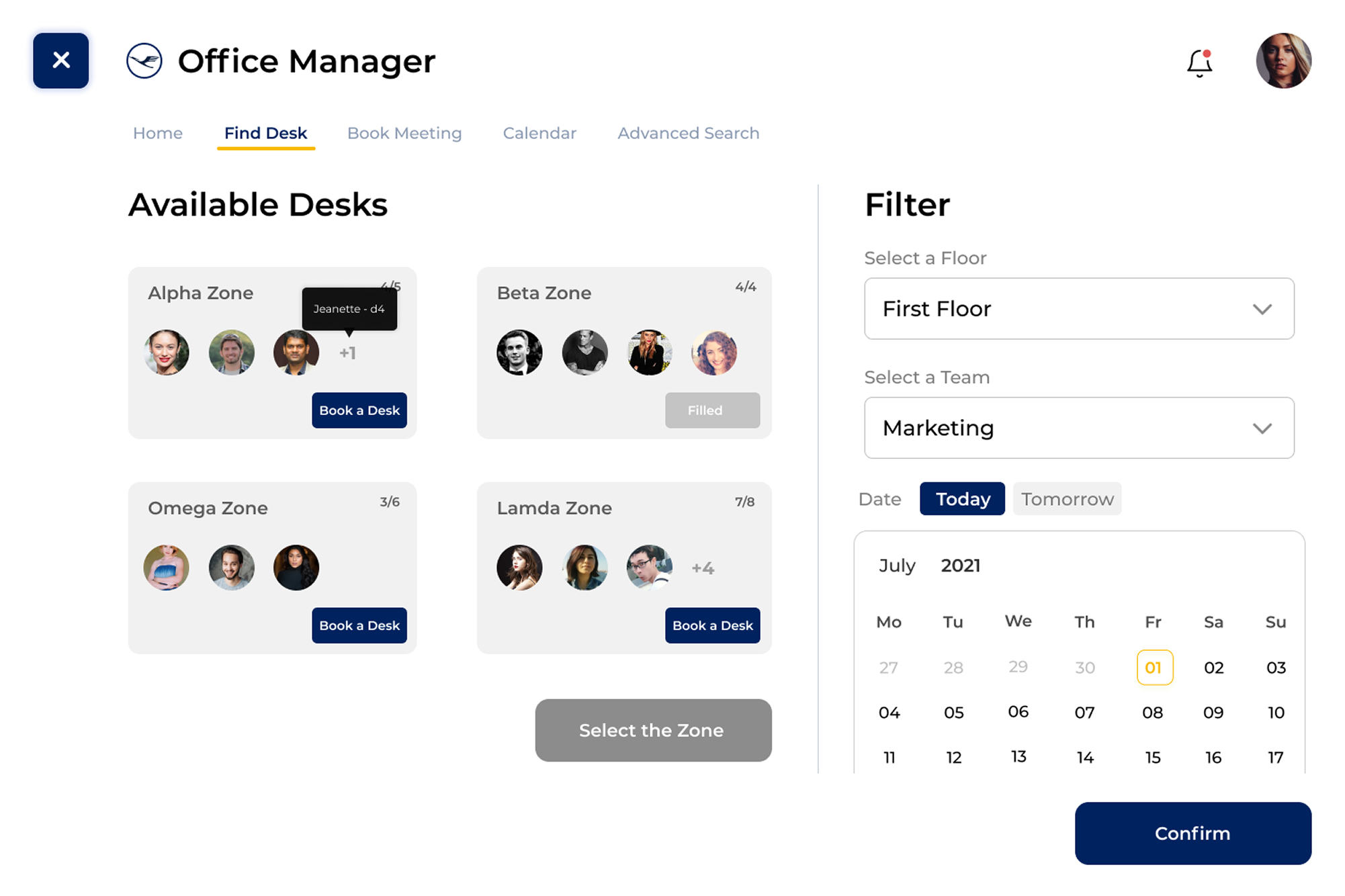
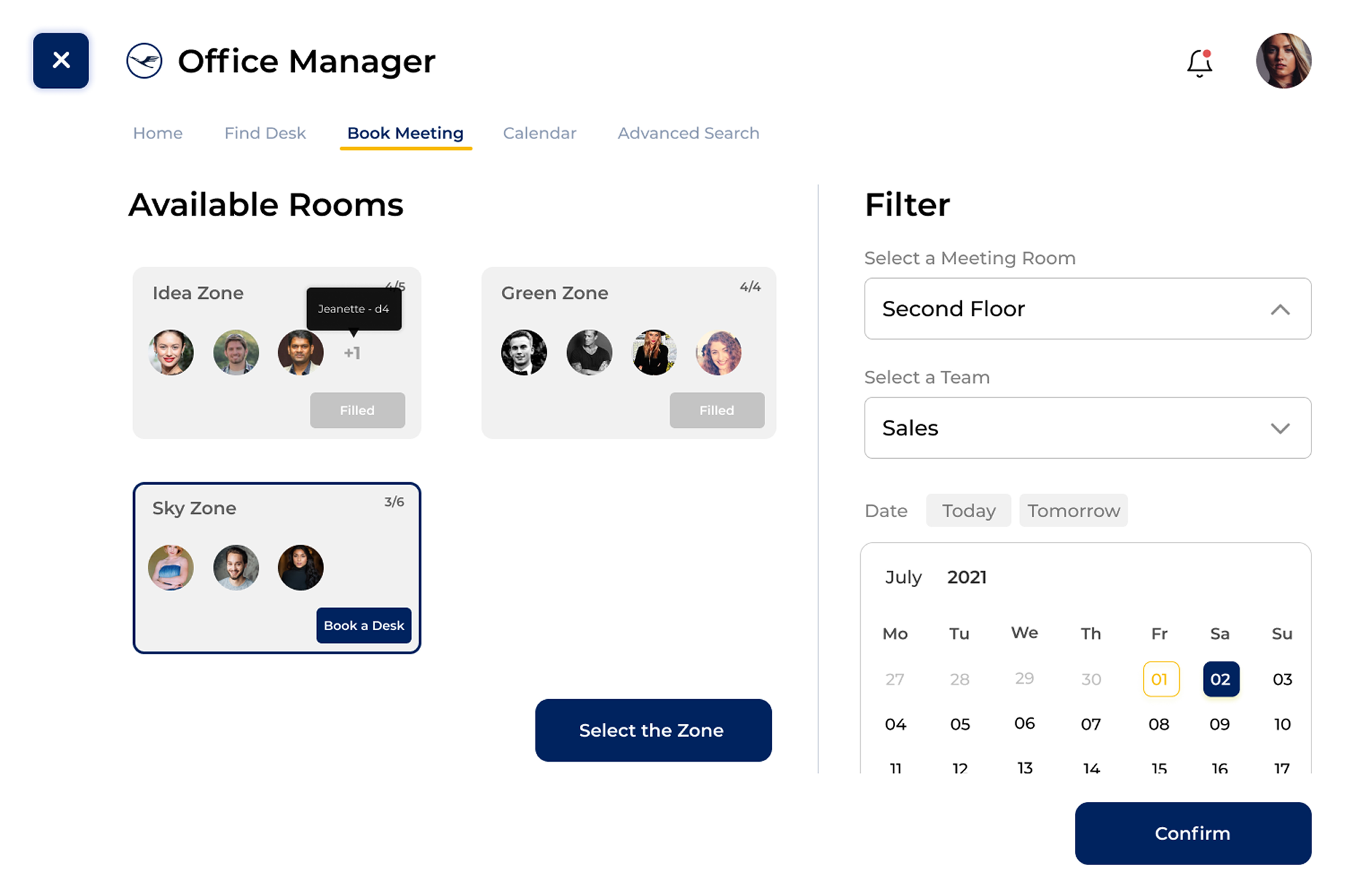
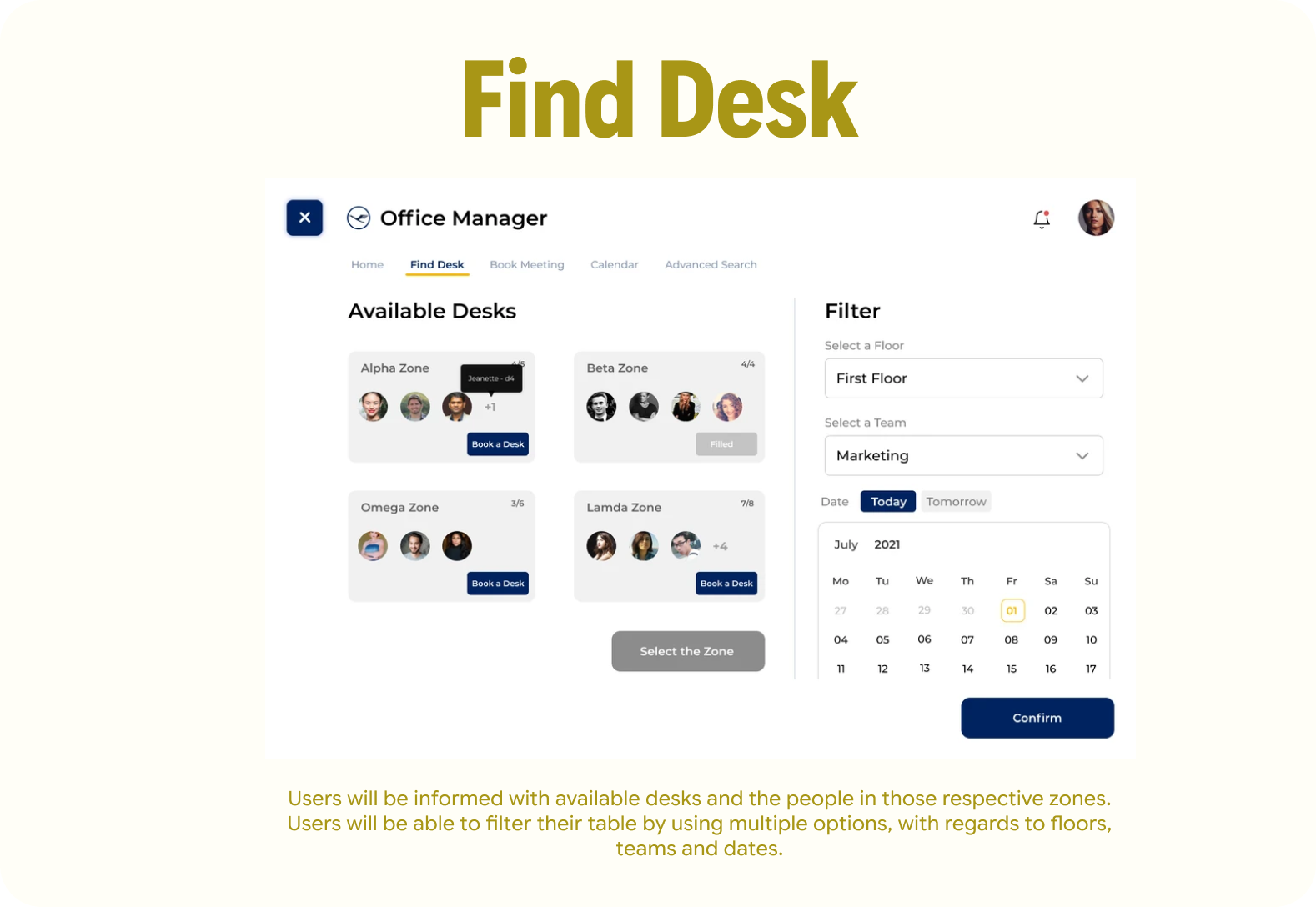
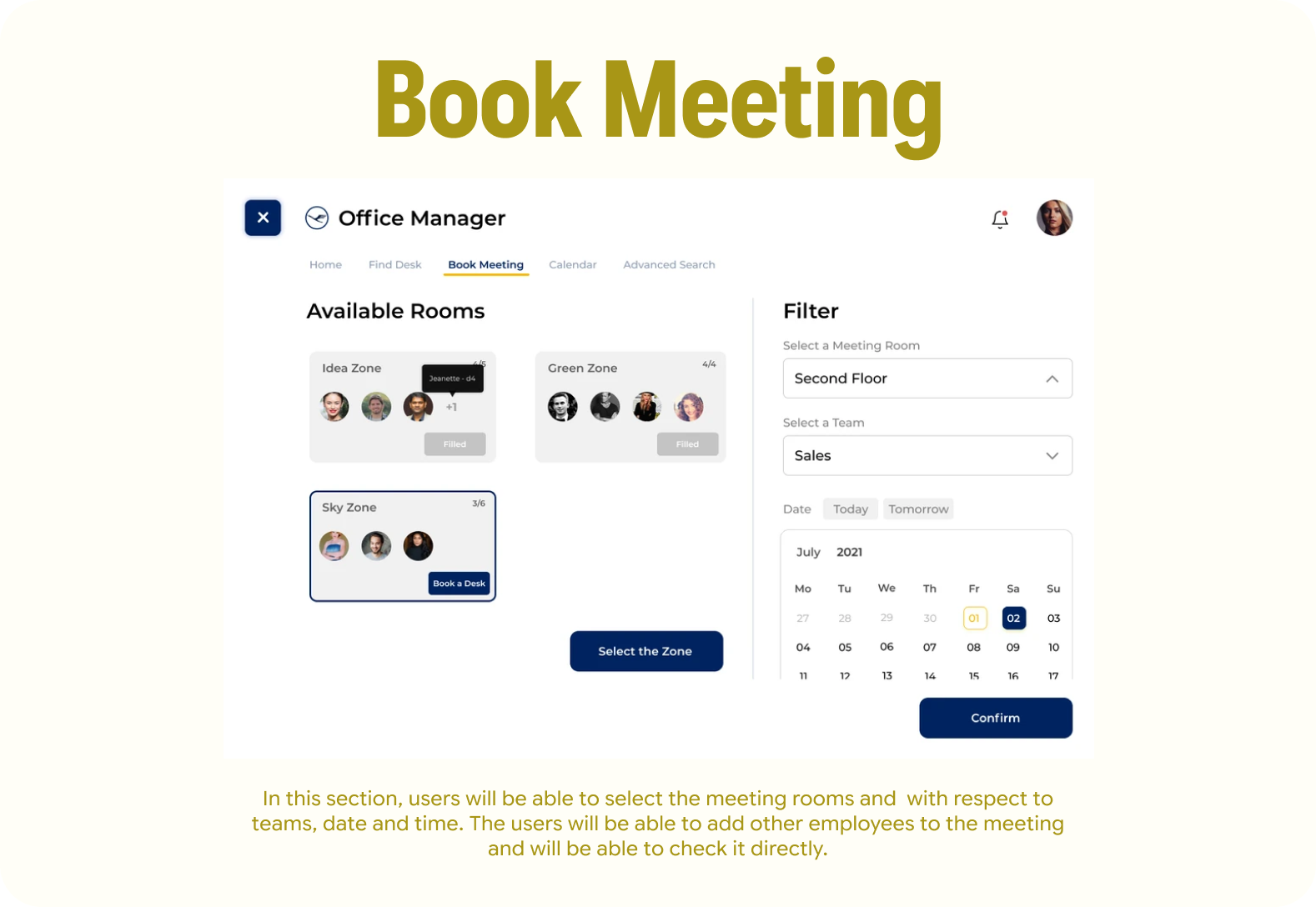
- Interactive Office Map: Visual booking for desks and rooms.
- Team Radar: A calendar view to see when teammates are in the office.
- Smart Toggle: List vs. Grid views for booking management.
- Minimalist Dashboard: Focus on essential "no-frills" functionality.
Design Process
Sketching & Wireframing
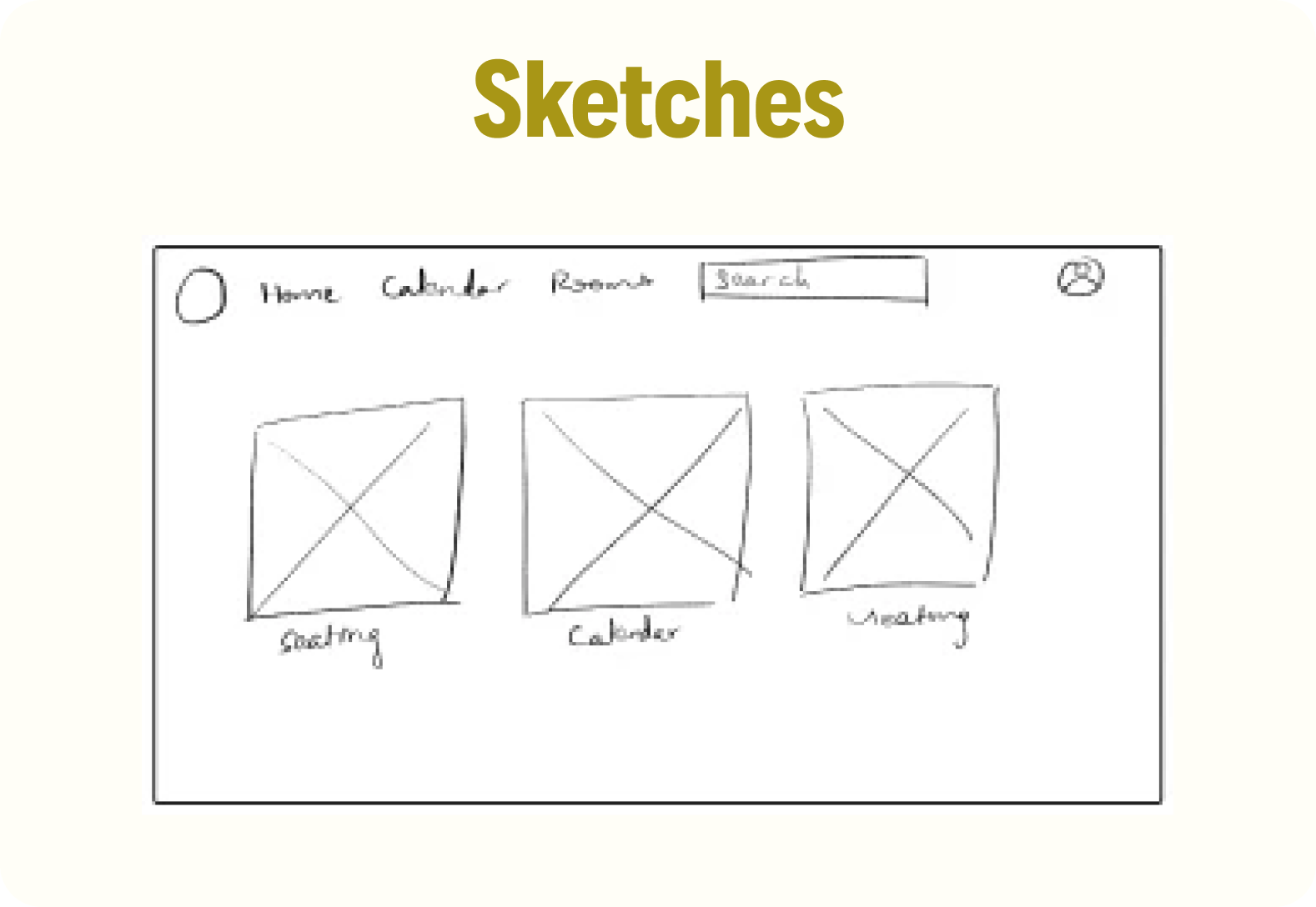
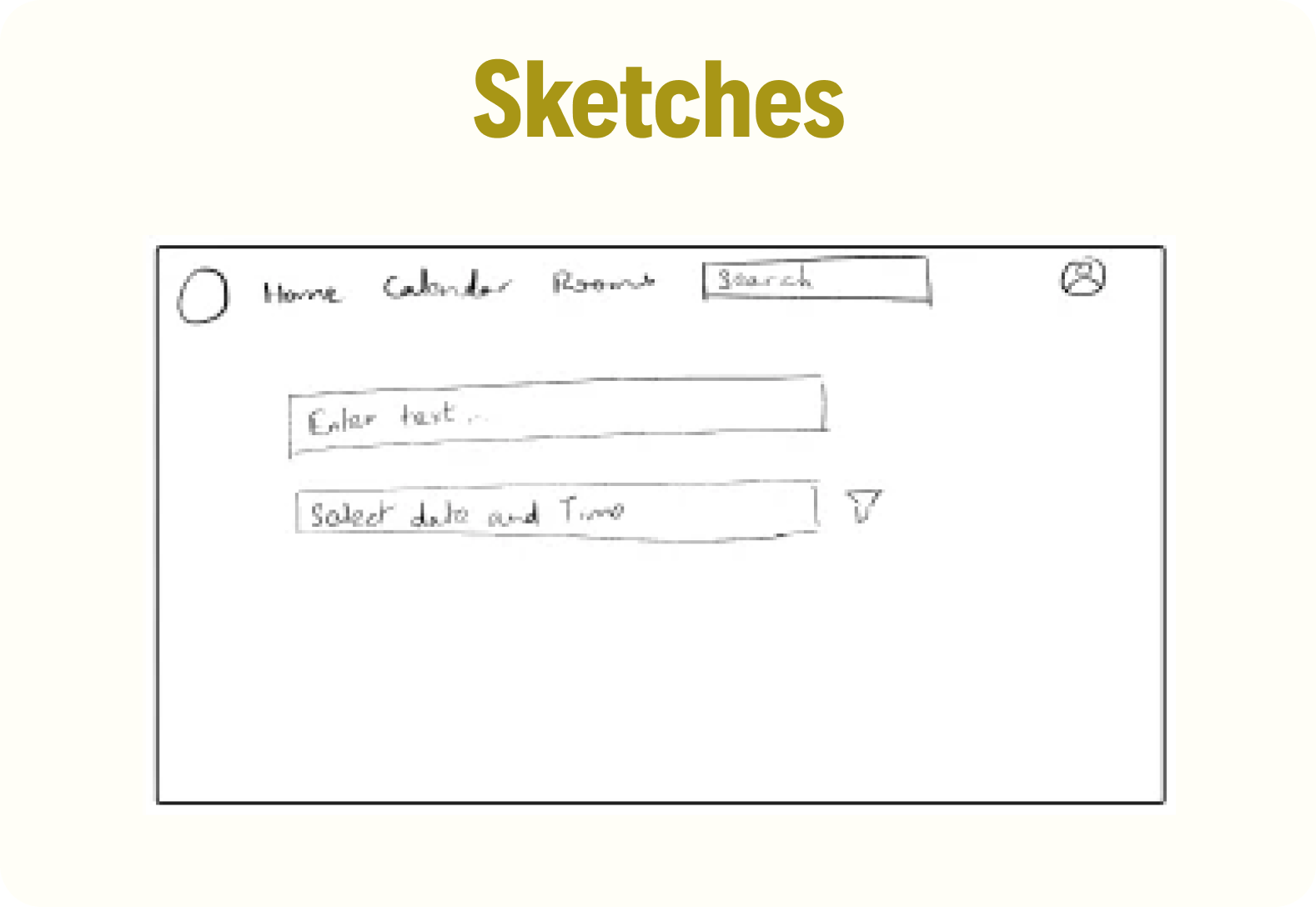
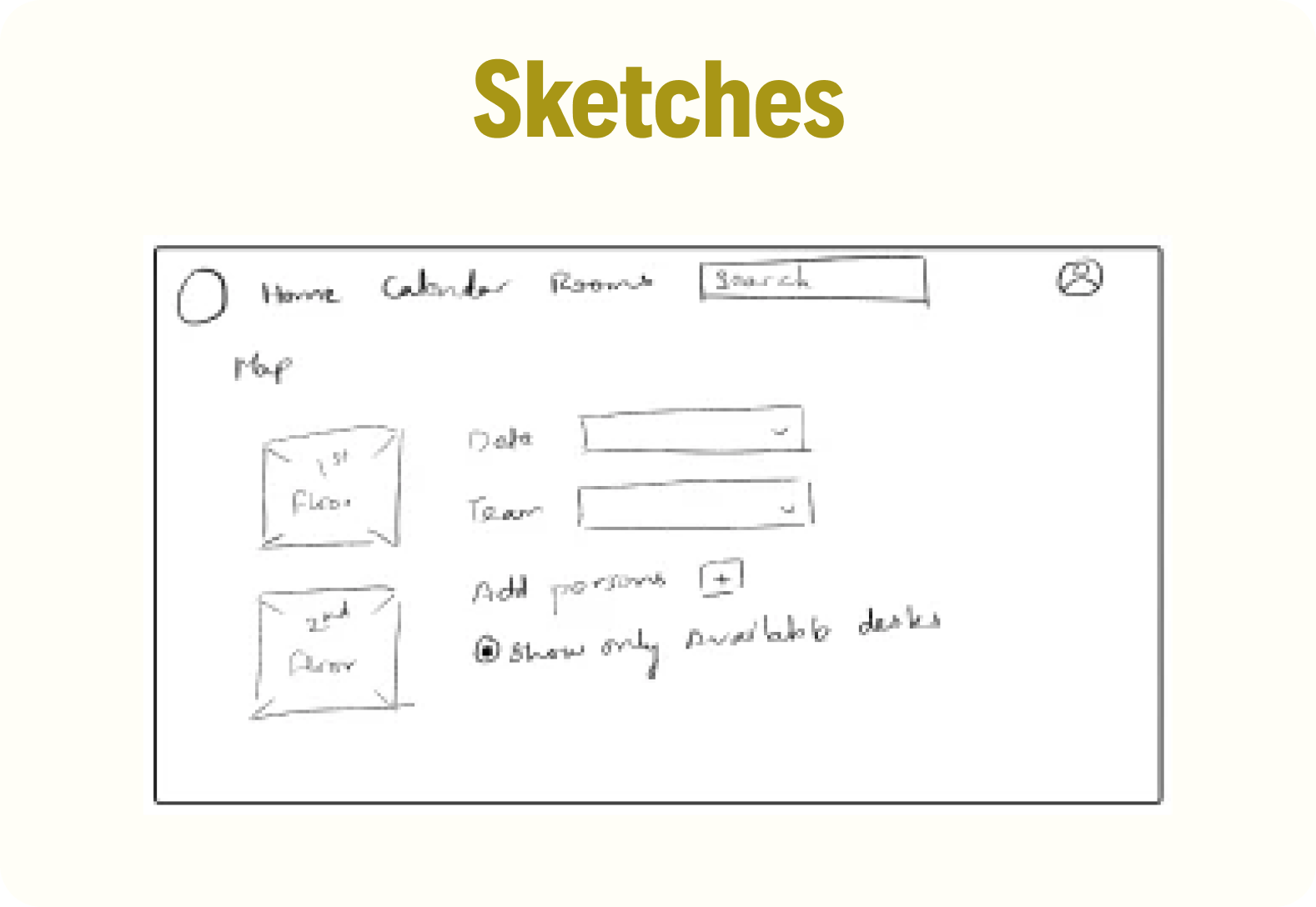
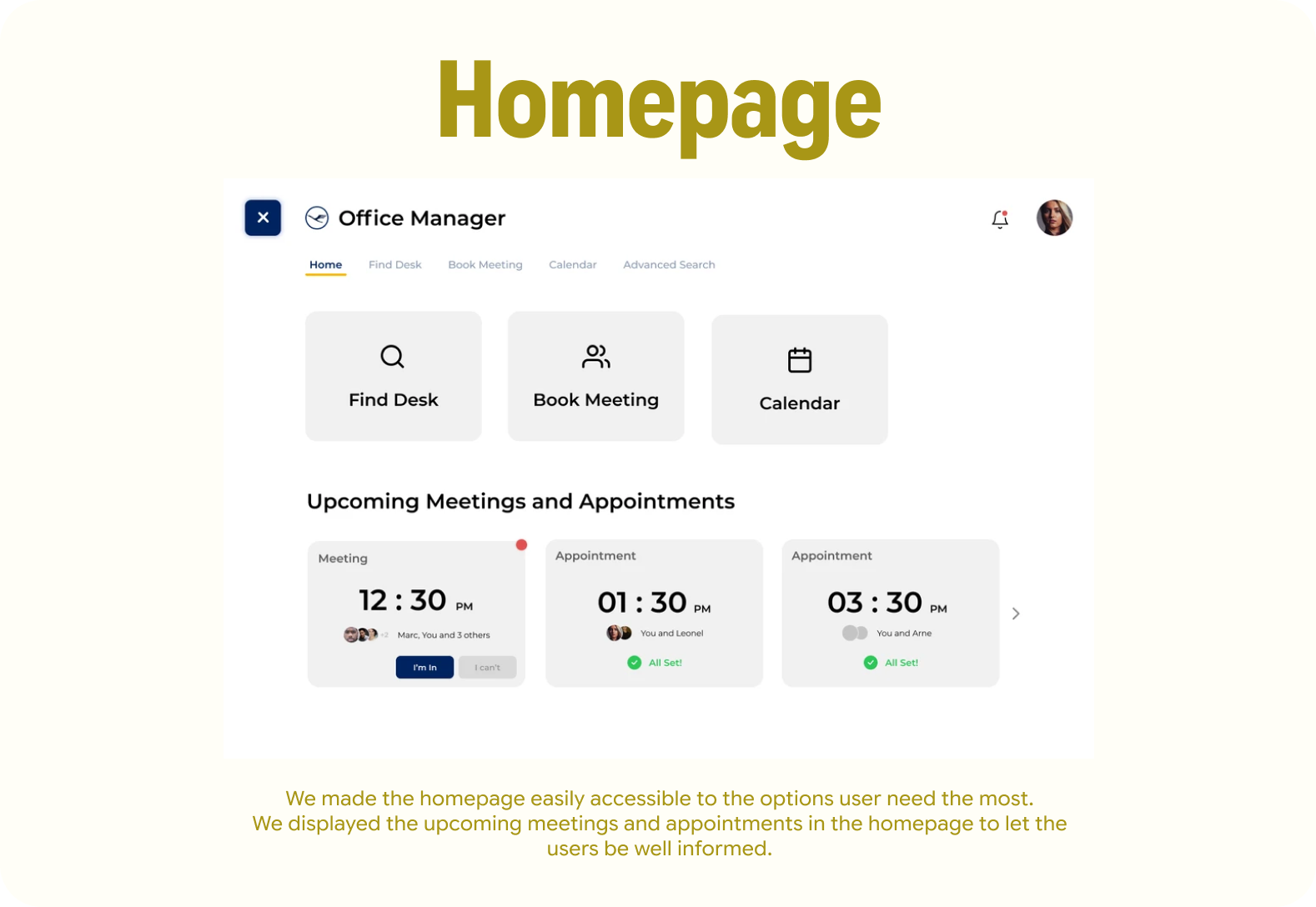
I led the initial interface concepts, sketching the Home Dashboard and Interactive Map. These sketches focused on establishing a clear hierarchy and reducing cognitive load.
Low-Fidelity Prototyping
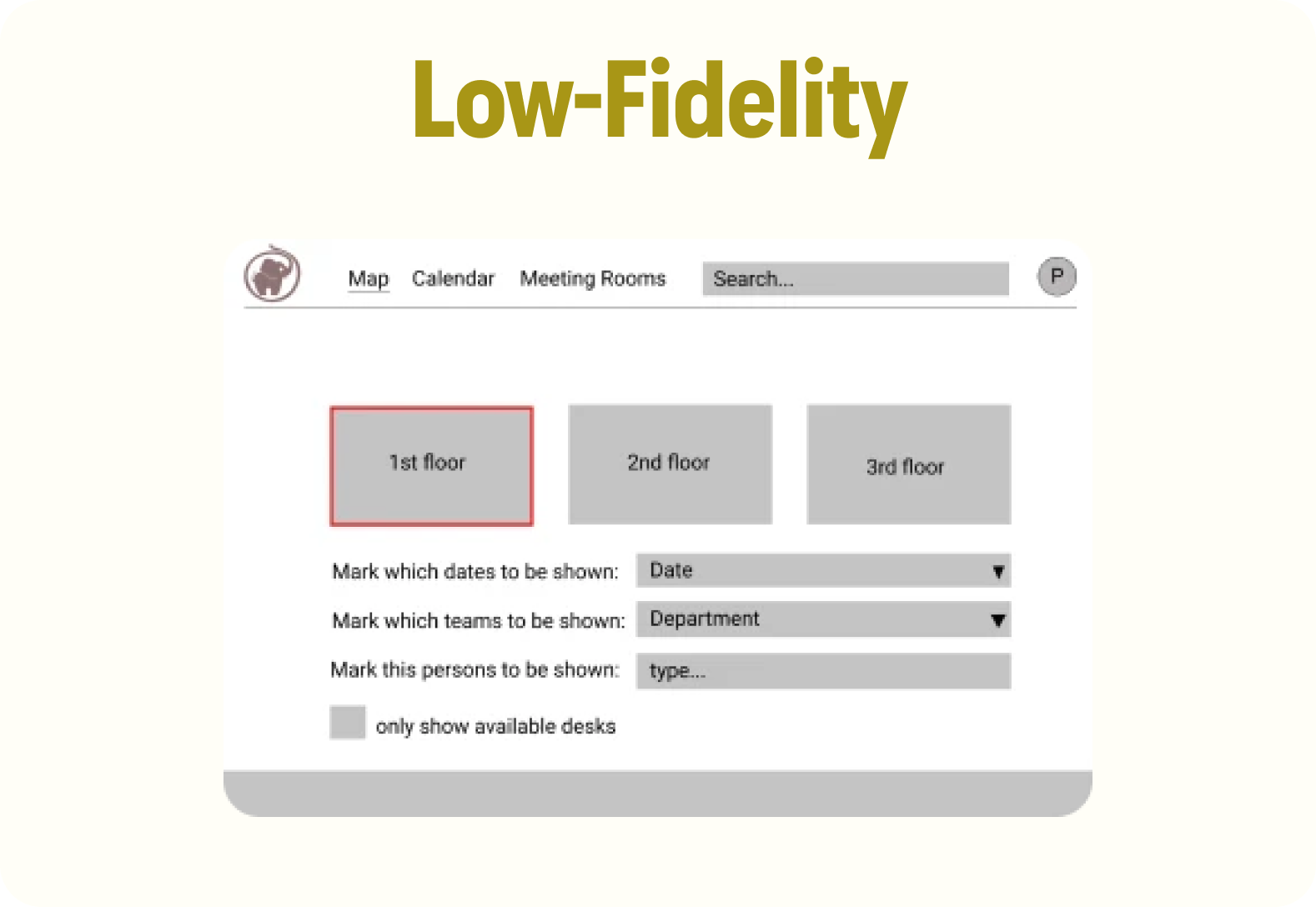
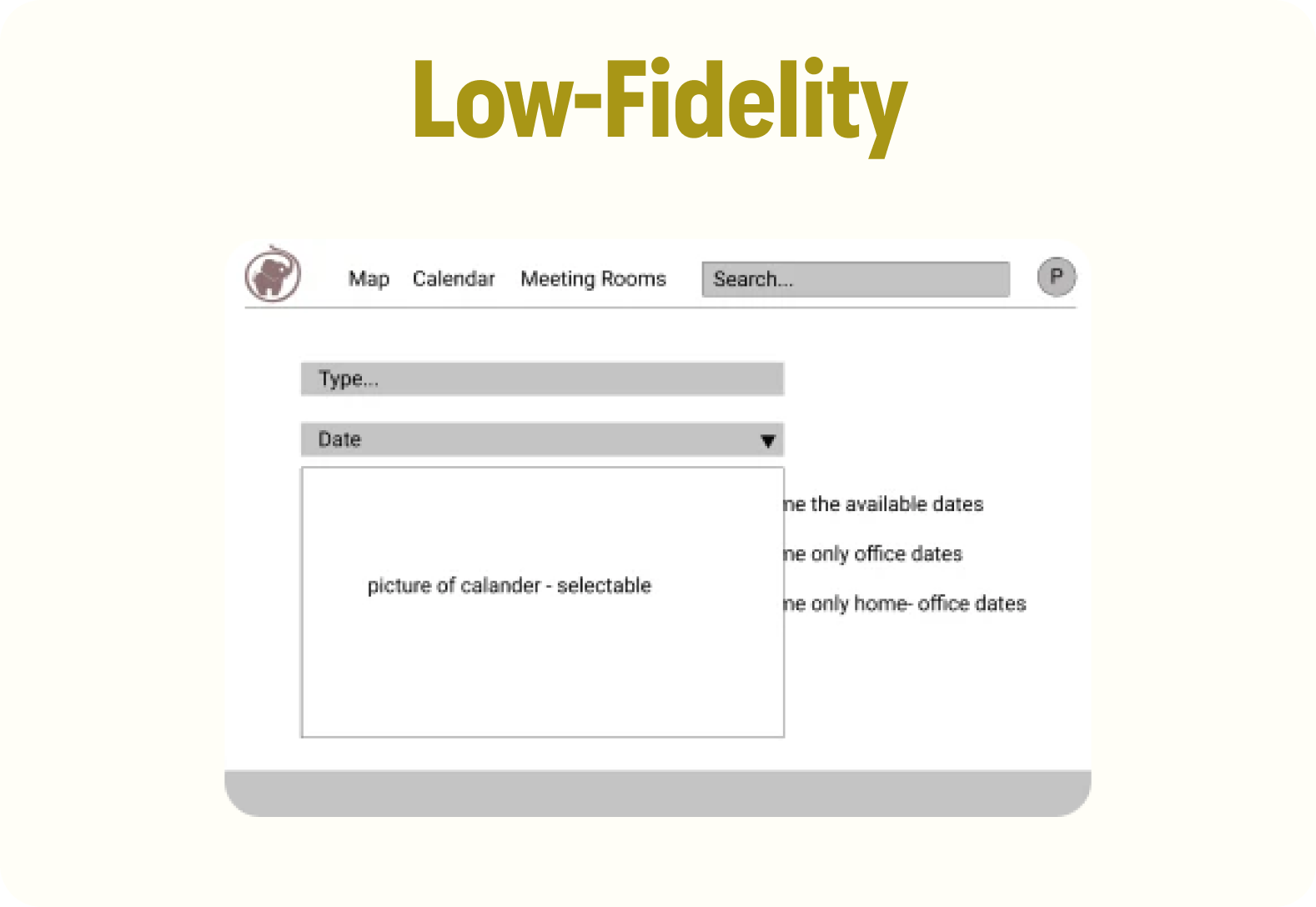
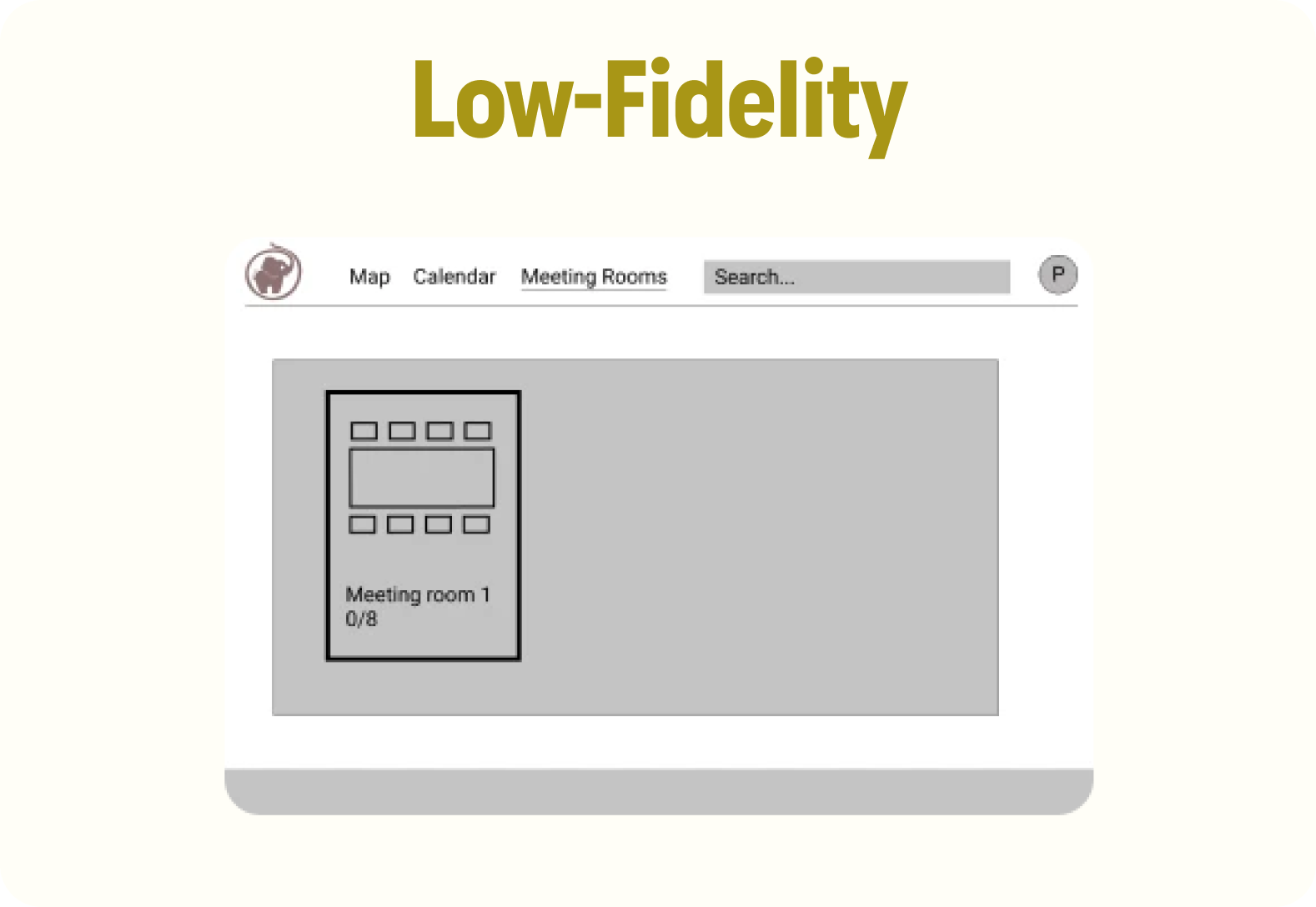
We translated sketches into a clickable Figma prototype to test the user flow and information architecture before committing to high-fidelity visuals.
Usability Testing
We conducted moderated usability tests with 4 participants to validate our concepts.
Testing Methodology:
- Remote via Google Meet (10 min per session).
- Task-based scenarios (e.g., "Book a desk near your manager").
- Post-test questionnaire (SUS-based).
Feedback Loop:
- Validation: Users appreciated the "all-in-one" approach and the simplicity of the map.
- Friction Points: Users felt the advanced search was redundant as a standalone page.
- Concerns: Questions arose regarding data privacy for official schedules.
High-Fidelity Design
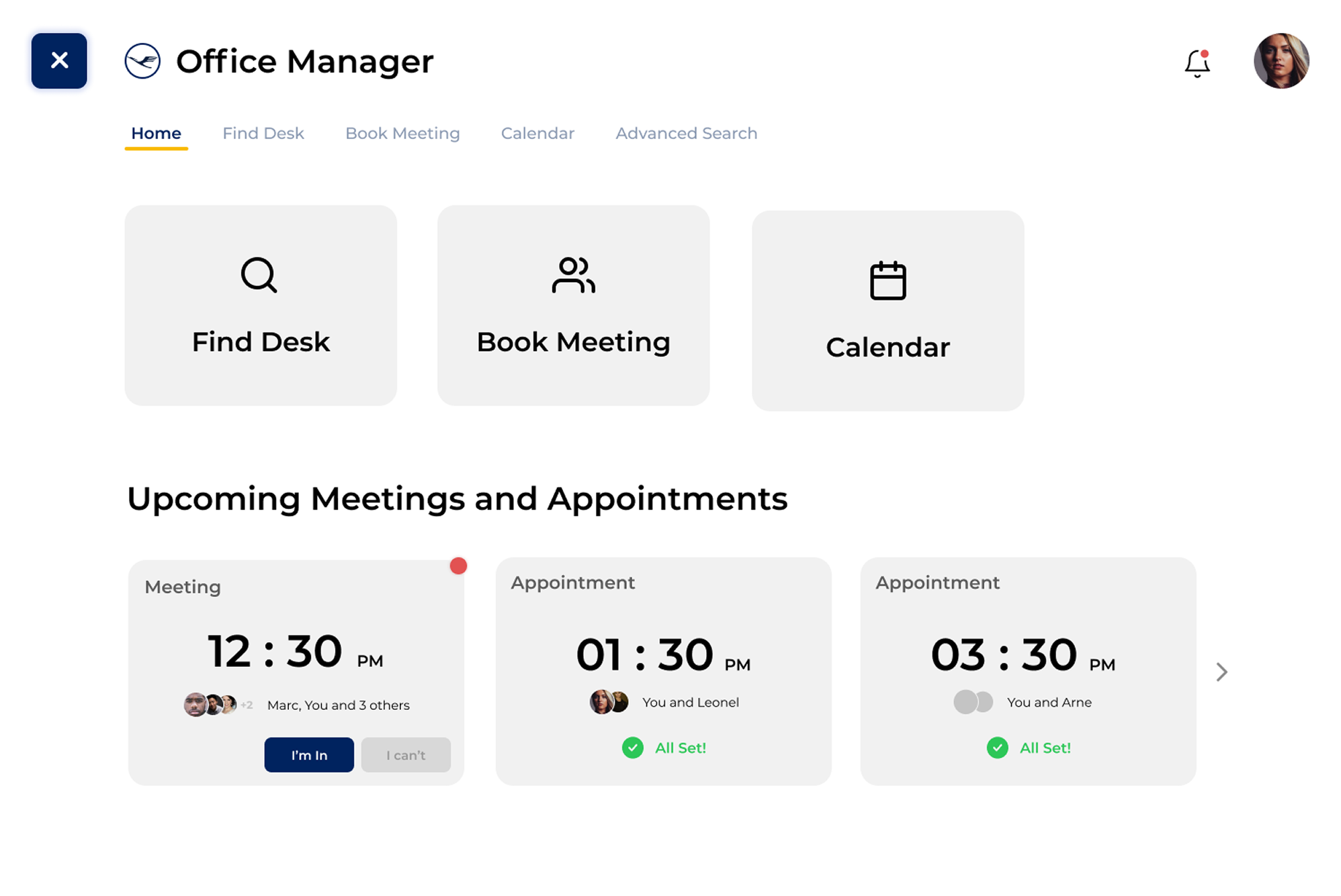
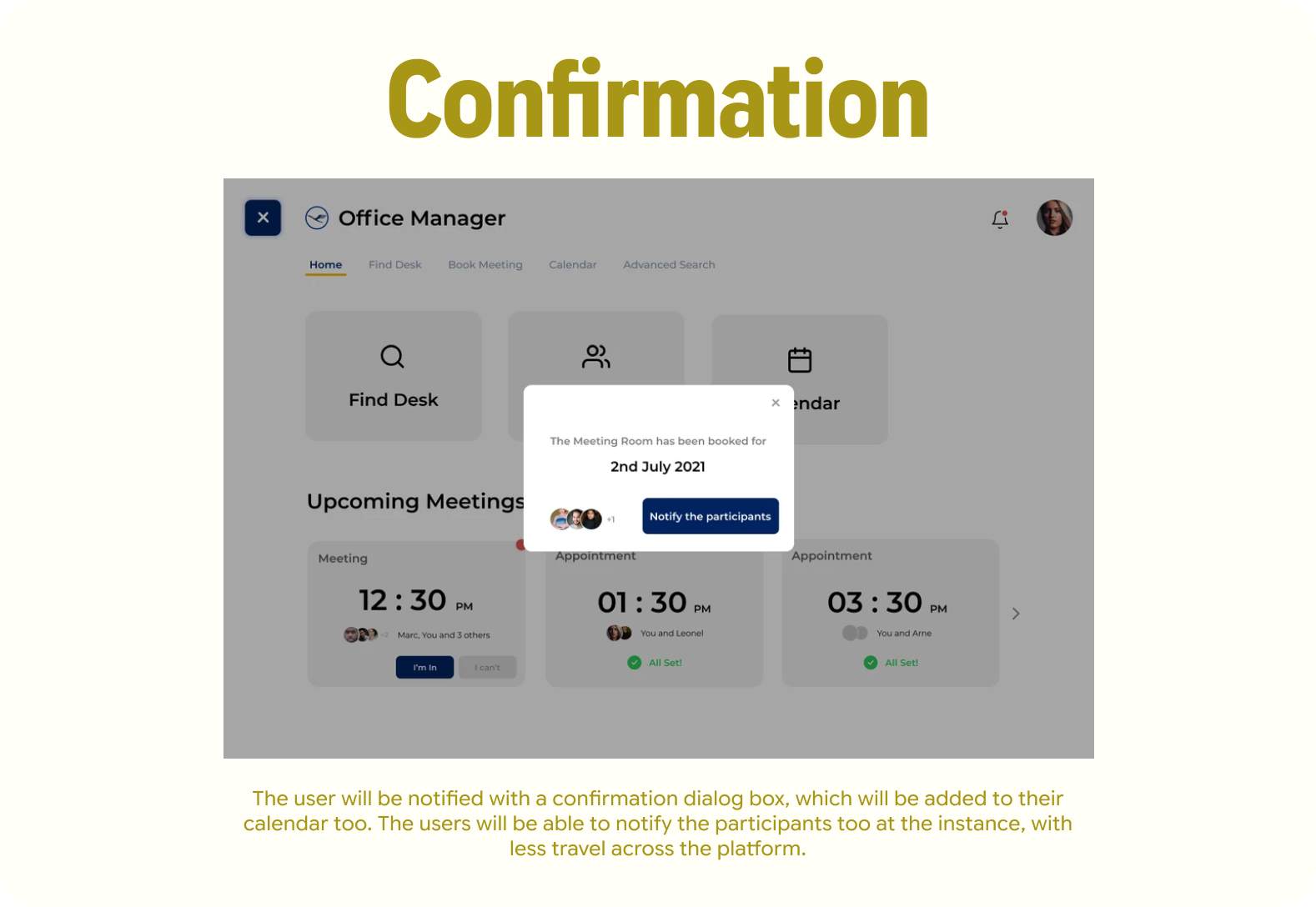
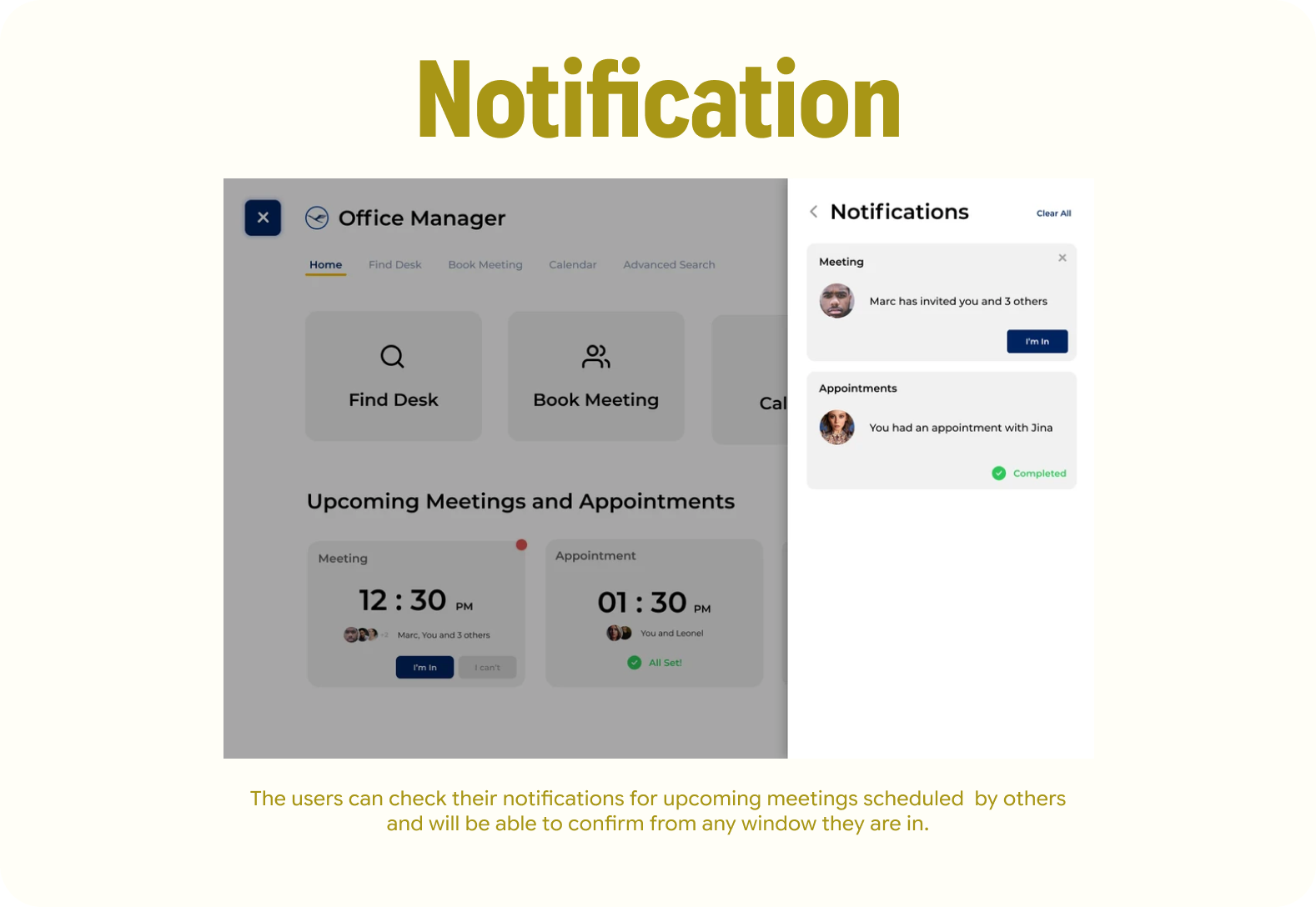
Incorporating the testing feedback, I led the UI design phase. We removed the redundant search page and refined the map interactions.
Visual Language:
- Brand Consistency: Strictly adhered to Lufthansa's corporate design guidelines (typography, color palette).
- Accessibility: High contrast for readability and clear status indicators (Available vs. Booked).
- Simplicity: Clean layouts to facilitate quick decision-making.
Product Strategy & Business Viability
To demonstrate business value beyond usability, we utilized the Lean Canvas method to map the product's viability for Lufthansa as a B2B solution.
Problem & Alternatives
Problem: Inefficiency caused by switching between apps; difficulty coordinating hybrid schedules.
Alternatives: Using fragmented tools (Outlook + Excel + WhatsApp) which leads to data silos.
Solution & Metrics
Solution: A unified dashboard for resource booking and team visibility.
Key Metrics: Reduction in time-to-book; Increase in office utilization rates; User satisfaction scores (NPS).
Value Proposition
Unique Value: The only tool that combines resource management with social coordination ("Team Radar") specifically for Lufthansa's ecosystem.
Unfair Advantage: Custom integration with Lufthansa's internal HR systems.
Revenue Streams
Model: B2B Licensing (SaaS) for other companies within the Lufthansa Group or external partners.
Upsell: Premium features for custom floor plan integration.
Outcome & Reflection
Client Reception
The final prototype and business case were presented to the Lufthansa Group stakeholders.
- Approval: The client praised the platform's practicality and adherence to brand standards.
- Integration: They expressed interest in merging our "Team Radar" concept with an existing internal project to create a comprehensive HR tool.
Lessons Learned
- Balancing Needs: Learned to navigate the trade-off between user desires (social features) and business constraints (security/privacy).
- Iterative Growth: The importance of testing early; the low-fidelity tests saved us hours of UI work by cutting unnecessary features.
Future Scope
- Data Security: Implementation of robust privacy protocols for employee tracking.
- Collaboration: Adding internal notes/shift scheduling for team leads.
If you're interested


 View Prototype